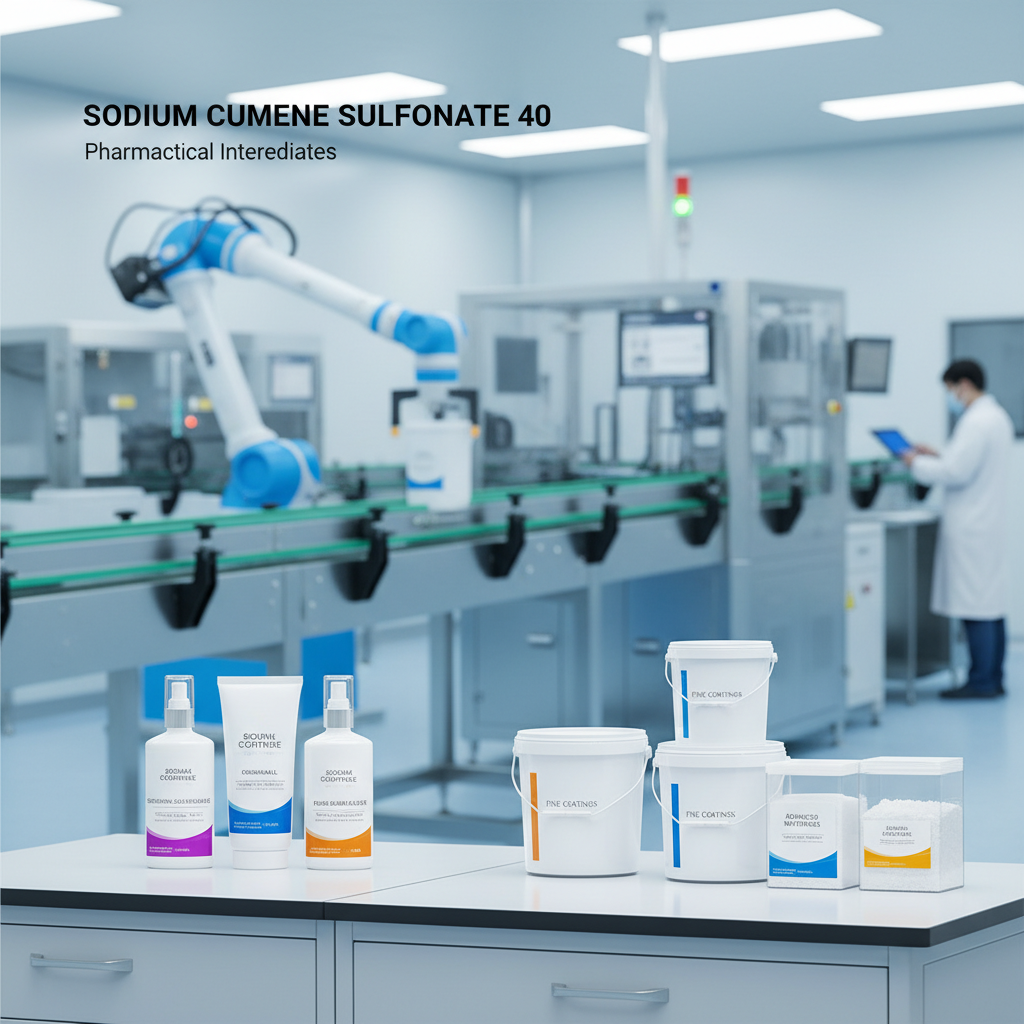
In the complex landscape of chemical manufacturing and pharmaceutical synthesis, sodium cumene sulfonate 40 serves as a critical hydrotrope, ensuring the stability and solubility of various aqueous systems. By reducing the surface tension and increasing the solubility of organic compounds in water, this specialized agent plays a pivotal role in maintaining the consistency of high-performance chemical formulations. Understanding its chemical properties is essential for engineers and researchers aiming to optimize industrial processes.
Globally, the demand for high-purity hydrotropes has surged as the pharmaceutical and specialty chemical industries shift toward more efficient, water-based solvent systems. The utilization of sodium cumene sulfonate 40 allows manufacturers to avoid volatile organic compounds (VOCs), aligning with international environmental standards and safety protocols. This transition not only enhances product safety but also optimizes the overall cost-effectiveness of large-scale production lines.
For professionals in the pharmaceutical intermediate sector, mastering the application of sodium cumene sulfonate 40 means achieving a delicate balance between stability and reactivity. Whether it is used in the formulation of liquid detergents or as a coupling agent in complex chemical reactions, its ability to prevent phase separation is indispensable. This guide explores the technical nuances, global applications, and future trends of this versatile compound.
The Industrial Significance of sodium cumene sulfonate 40
The global chemical market has seen a paradigm shift toward the use of hydrotropes like sodium cumene sulfonate 40 to replace hazardous solvents. According to industrial benchmarks and ISO standards for chemical purity, the ability to maintain a clear, single-phase solution in concentrated surfactant systems is paramount. This compound addresses the critical challenge of "salting out," where solutes precipitate out of a solution, thereby ensuring the longevity and efficacy of the final product.
From a macroeconomic perspective, the integration of sodium cumene sulfonate 40 into the supply chain has allowed pharmaceutical intermediate manufacturers to scale their operations with higher precision. By reducing the reliance on complex solvent recovery systems, companies can lower their operational expenditure (OPEX) while adhering to stringent global health and safety regulations, making it a cornerstone of modern chemical engineering.
Chemical Definition and Functional Mechanism
At its core, sodium cumene sulfonate 40 is an aromatic sulfonate that acts as a hydrotrope. Unlike traditional surfactants that form micelles to solubilize oils, a hydrotrope works by altering the solvent properties of the aqueous phase. It increases the solubility of poorly soluble organic compounds by disrupting the structured network of water molecules, which facilitates a more homogeneous mixture.
This mechanism is vital in the manufacture of Pharmaceutical Intermediates and high-concentration cleaning agents. By preventing the separation of oil and water phases without creating the viscosity spikes often associated with standard emulsifiers, sodium cumene sulfonate 40 ensures that active ingredients remain uniformly distributed throughout the medium, which is essential for dosage accuracy and reaction efficiency.
Furthermore, the "40" in the nomenclature typically refers to the concentration or a specific grade of purity and activity. This standardized concentration allows chemists to calculate precise molar ratios during the synthesis of APIs (Active Pharmaceutical Ingredients), ensuring that the coupling effect is optimized without introducing excess impurities that could interfere with subsequent crystallization or purification steps.
Core Components of Performance Excellence
The efficacy of sodium cumene sulfonate 40 is defined by its exceptional solubility profile. In industrial settings, the ability to maintain stability across varying temperature ranges is critical. This thermal resilience ensures that products do not undergo phase separation during shipping in extreme climates, providing a reliable foundation for global logistics.
Scalability is another key factor where sodium cumene sulfonate 40 excels. Because it integrates seamlessly into existing liquid-handling infrastructure, manufacturers can transition from pilot-plant batches to full-scale industrial production without needing to redesign their mixing vessels or pumping systems, significantly reducing the time-to-market for new formulations.
Cost efficiency is realized through the compound's high potency. Small additions of sodium cumene sulfonate 40 can dramatically increase the solubility of other expensive components in a mixture. This optimization minimizes waste and reduces the volume of raw materials required to achieve the desired chemical activity, directly impacting the bottom line of pharmaceutical and chemical plants.
Global Applications and Industrial Use Cases
The application of sodium cumene sulfonate 40 spans multiple continents, with heavy usage in the chemical hubs of East Asia and North America. In the realm of pharmaceutical synthesis, it is frequently employed as a coupling agent to facilitate the reaction between hydrophobic organic precursors and hydrophilic catalysts, ensuring a high yield of pharmaceutical intermediates.
Beyond the lab, this compound is indispensable in remote industrial zones where water quality may vary. For instance, in large-scale water treatment chemicals production, sodium cumene sulfonate 40 is used to stabilize concentrated liquid blends, preventing the clogging of industrial pipes and ensuring a consistent flow of treatment agents into the system.
Comparative Performance Analysis of sodium cumene sulfonate 40
Strategic Advantages and Long-Term Value
Integrating sodium cumene sulfonate 40 into a production line offers immediate tangible benefits, most notably in the realm of sustainability. By enabling the use of aqueous-based systems, companies significantly reduce their carbon footprint and eliminate the need for costly hazardous waste disposal associated with organic solvents. This shift not only meets regulatory requirements but also enhances the brand's reputation as an eco-conscious innovator.
From a logical and emotional standpoint, the use of this high-stability compound fosters trust between the manufacturer and the end-user. When a pharmaceutical intermediate is produced using sodium cumene sulfonate 40, the resulting consistency in purity and appearance signals a commitment to quality. This reliability reduces the risk of batch failures, ensuring that critical medicines reach patients without delay or defect.
Emerging Future Trends and Innovations
The future of sodium cumene sulfonate 40 is closely tied to the digital transformation of chemical plants. With the advent of "Industry 4.0," AI-driven dosing systems are now being implemented to monitor the real-time solubility of mixtures, adjusting the concentration of hydrotropes automatically to maintain perfect homogeneity. This precision prevents the over-use of chemicals, further driving down costs and environmental impact.
Sustainability is also driving research into "green" synthesis pathways for the compound itself. Innovations in catalytic sulfonation are aiming to reduce the energy required to produce sodium cumene sulfonate 40, utilizing renewable feedstocks where possible. This evolution ensures that the product remains viable in a world governed by strict "Green Chemistry" principles.
Moreover, we are seeing an increase in the application of these hydrotropes in the development of advanced drug delivery systems. By fine-tuning the properties of sodium cumene sulfonate 40, researchers are exploring ways to improve the bioavailability of poorly soluble APIs, potentially unlocking new treatments for complex diseases in the musculoskeletal and nervous systems.
Overcoming Implementation Challenges
Despite its benefits, the initial adoption of sodium cumene sulfonate 40 can present challenges, particularly regarding the precise determination of the "cloud point"—the temperature at which the solution becomes turbid. If the concentration is not perfectly calibrated, the hydrotrope may fail to prevent phase separation under extreme conditions. Expert insight suggests implementing a rigorous thermal stress testing protocol during the formulation phase to map the stability envelope.
Another common limitation is the potential for ionic interference in highly sensitive electronic-grade chemicals. To overcome this, engineers are adopting advanced membrane filtration techniques to remove excess sodium cumene sulfonate 40 after it has served its purpose as a coupling agent. This ensures that the final product maintains the highest purity levels required for high-tech applications.
Finally, supply chain volatility can affect the availability of high-purity grades. The solution lies in strategic sourcing and the establishment of long-term partnerships with certified manufacturers who adhere to strict quality control standards. By auditing the production process of sodium cumene sulfonate 40, companies can ensure a steady stream of consistent material, avoiding the pitfalls of inconsistent batch quality.
Technical Analysis and Comparison of sodium cumene sulfonate 40 Grades
| Grade Type |
Solubility Index |
Thermal Stability |
Recommended Application |
| Industrial Grade |
High |
Moderate |
Water Treatment |
| Pharma Grade 40 |
Very High |
High |
API Synthesis |
| Analytical Grade |
Extreme |
Very High |
Lab Research |
| Eco-Certified |
High |
Moderate |
Green Detergents |
| Concentrated 40% |
High |
High |
Bulk Intermediate |
| Custom Blend |
Variable |
Variable |
Specialty Coatings |
FAQS
Unlike standard surfactants that create micelles to encapsulate hydrophobic molecules, sodium cumene sulfonate 40 acts as a hydrotrope. It increases the solubility of other surfactants and organic compounds by modifying the aqueous environment itself, preventing phase separation without significantly increasing the viscosity of the solution, which is critical for high-concentration industrial blends.
It reduces costs by allowing the use of water-based solvent systems, which are cheaper and safer than organic solvents. Furthermore, by increasing the efficiency of the coupling process in pharmaceutical intermediates, it reduces the amount of raw materials wasted due to precipitation or incomplete reactions, leading to higher yields and lower per-unit production costs.
Yes, it is widely used to replace VOCs (Volatile Organic Compounds), making the final formulation more environmentally friendly. Its high solubility and biodegradability profiles make it a preferred choice for companies adhering to green chemistry standards and international environmental regulations, reducing the overall ecological footprint of the manufacturing process.
Clouding occurs when the solution reaches its cloud point. To prevent this, you should conduct a thermal stability study to determine the exact concentration of sodium cumene sulfonate 40 required for your specific temperature range. Adjusting the molar ratio or adding a co-hydrotrope can often stabilize the solution against temperature-induced turbidity.
Absolutely. Due to its ability to stabilize complex active ingredients in aqueous solutions, it is frequently used in veterinary pharmaceuticals to ensure that medications remain homogenous and stable during storage, which is essential for the safety and efficacy of animal health products.
It should be stored in cool, dry conditions, ideally in stainless steel drums or high-density polyethylene (HDPE) containers to prevent contamination. During transport, maintaining a stable temperature is recommended to avoid premature crystallization or phase changes, ensuring that the product arrives in its optimal liquid state for immediate industrial use.
Conclusion
In summary, sodium cumene sulfonate 40 is far more than a simple additive; it is a strategic tool that enables efficiency, stability, and sustainability across the chemical and pharmaceutical industries. From preventing phase separation in complex API synthesis to reducing the environmental impact of industrial cleaners, its role as a high-performance hydrotrope is indispensable for modern manufacturing excellence.
Looking ahead, the continued integration of this compound with AI-driven dosing and green synthesis methods will further solidify its value. We recommend that manufacturers prioritize high-purity grades and conduct rigorous stability testing to fully leverage the benefits of this versatile agent. For more information on sourcing high-quality chemical intermediates, visit our website: www.kxdchem.com.